
 See Our Latest Article on HelloNation
Why does movement throughout the day matter?
Healthy movement is not limited to formal exercise. It also includes standing up regularly, changing positions, walking short distances, reaching comfortably, carrying objects safely, and using the joints through a comfortable range of motion.
For residents of Milton, NY, daily movement may include desk work, driving, household tasks, outdoor maintenance, caring for family members, or seasonal activities. Spending long periods in one position can leave the neck, shoulders, back, hips, and legs feeling stiff even when there has been no obvious injury.
The goal is not perfect posture or constant activity. A more practical goal is to avoid staying still for too long and to distribute physical demands across the day.
How often should you change position?
Change position before discomfort becomes intense. A short movement pause every 20 to 30 minutes can be useful during computer work, reading, television viewing, or other seated tasks, although the exact timing can vary.
A movement pause does not need to be a full exercise session. Try:
- Standing and taking several slow steps
- Rolling the shoulders gently
- Moving the ankles through a comfortable range
- Reaching the arms overhead without forcing the motion
- Looking away from a screen and turning the head slowly
- Taking a few deeper breaths while allowing the ribs to expand
Alternating between sitting, standing, walking, and light household activity is generally more useful than trying to hold one “perfect” posture for hours.
What is a comfortable sitting position?
A supportive sitting position allows the body to remain relaxed rather than braced. Keep both feet supported on the floor or on a stable footrest. The knees should be roughly level with or slightly lower than the hips, and the lower back should have reasonable support.
For computer work:
- Keep the screen near eye level so the head does not remain tilted downward.
- Position the keyboard and mouse close enough that the elbows stay near the body.
- Keep the wrists relatively straight instead of bent upward or sideways.
- Let the shoulders remain relaxed rather than lifted toward the ears.
- Keep frequently used items within easy reach.
These adjustments can reduce unnecessary reaching and sustained bending. They do not eliminate the need to move. Even a well-arranged workstation can become uncomfortable if the body remains in the same position for too long.
How can people add more walking to an ordinary day?
Short walking periods can be combined across the day. A few minutes of walking after meals, during a work break, while talking on the phone, or before settling in for the evening can add useful activity without requiring a complicated routine.
Other practical options include:
- Walking through the house during brief breaks
- Taking the longer route for routine errands when conditions are safe
- Carrying lighter loads in multiple trips instead of one overloaded trip
- Walking while waiting for food, a meeting, or a household task
- Using indoor walking as an alternative during rain, snow, ice, or extreme temperatures
Adults generally benefit from working toward at least 150 minutes of moderate-intensity activity each week, along with muscle-strengthening activity on two or more days. That amount can be divided into shorter sessions. People who are not currently active can begin with manageable periods and build gradually.
What should be considered during seasonal outdoor tasks?
Seasonal chores can place sudden demands on muscles and joints, particularly when a person moves from low activity to several hours of lifting, raking, gardening, or snow-related work.
Before starting, spend a few minutes walking and moving the shoulders, hips, knees, and ankles. Begin with easier tasks before heavier ones. Use tools that allow an upright position when possible, and avoid twisting while carrying or lifting.

For lifting:
1. Move close to the object.
2. Place the feet securely.
3. Bend through the hips and knees rather than rounding only through the back.
4. Keep the load close to the body.
5. Turn with the feet instead of twisting the trunk while carrying.
Cold weather can make muscles feel less flexible, while wet leaves, uneven ground, snow, and ice increase the chance of slipping. Outdoor movement should be adjusted to the surface, footwear, temperature, and available daylight. Pacing matters more than finishing a task quickly.
Is standing all day healthier than sitting?
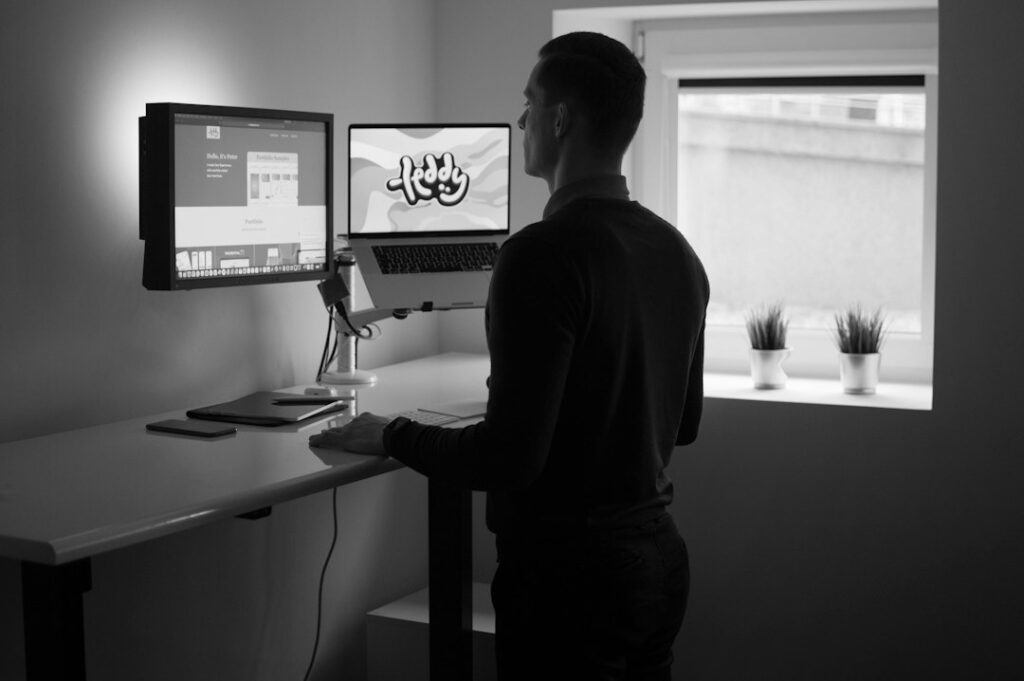
Not necessarily. Standing for long periods can also contribute to fatigue, foot discomfort, leg soreness, and back symptoms. Healthy movement involves changing positions and taking brief walking breaks rather than replacing prolonged sitting with prolonged standing.
People who work at a counter, stand during household tasks, or spend time on their feet may benefit from alternating tasks, shifting weight comfortably, sitting briefly when needed, and walking for short periods. Supportive footwear and a stable work surface can also make standing tasks easier.
How should screens and phones be used?
Frequent downward viewing can increase strain in the neck and upper back. Hold a phone closer to eye level when practical, use a larger screen for longer reading, and avoid bending the neck forward for extended periods.
A simple screen habit is the “look up and move” approach: every so often, raise the gaze, relax the jaw and shoulders, and change position. During long calls, alternate between sitting and standing or walk if attention and safety allow.
Children and adults alike may benefit from screen routines that include movement between activities rather than several uninterrupted hours in one position.
What movements are appropriate when the body feels stiff?
Gentle movement is usually more appropriate than forcing a stretch. Start slowly and stay within a comfortable range. Useful options may include:
- Easy walking
- Gentle shoulder circles
- Slow hip and ankle movements
- Controlled sit-to-stand practice
- Light calf stretching with support nearby
- Relaxed breathing while lengthening the spine
A stretch should not produce sharp pain, electrical sensations, increasing numbness, or significant joint pain. Bouncing or forcing a joint farther than it comfortably moves can aggravate symptoms.
If a particular movement repeatedly causes pain, stop that movement and choose a less demanding option. New or persistent symptoms deserve individual evaluation, especially when pain follows a fall, lifting injury, or other event.
When should movement-related symptoms be checked?
Seek prompt medical attention for severe or rapidly worsening pain, major weakness, loss of coordination, new loss of bladder or bowel control, numbness in a concerning pattern, chest pain, shortness of breath, or symptoms after a serious fall or accident.
Less urgent but persistent problems may include pain that continues to interfere with sleep, work, walking, or normal household activities. Recurrent symptoms can also be a reason to review movement habits, footwear, workstation setup, lifting methods, and activity progression with a qualified health professional.
The most sustainable routine is usually modest and repeatable: change positions often, walk when practical, strengthen gradually, and respect warning signs rather than pushing through them.
